
Working with the Ministry of Defence (MOD) is an exciting prospect for any growing businesses. Small and Medium-sized Enterprises (SMEs) make up about 95% of major UK Defence trade bodies, forming the essential foundation of national security. However, stepping into this sector means shifting from standard commercial habits, to a more disciplined and robust security approach. The first line of procedural enforcement and bridge between your daily work and the MOD’s strict requirements is a set of guidelines called Security Operating Procedures (SyOPs), which are a part of a Security Management Plan (SMP) or Security Management System (SMS).
In this blog, we will examine the role of the SMP in the UK Defence supply chain. The scope of this content focuses specifically on how a SMP bridges the gap between high-level MOD policy and your daily operations. We will discuss their impact on contract fulfilment, your obligations under the National Security Act 2023, and the fundamental technical controls required for SMEs to survive.
What Exactly is a SMP?
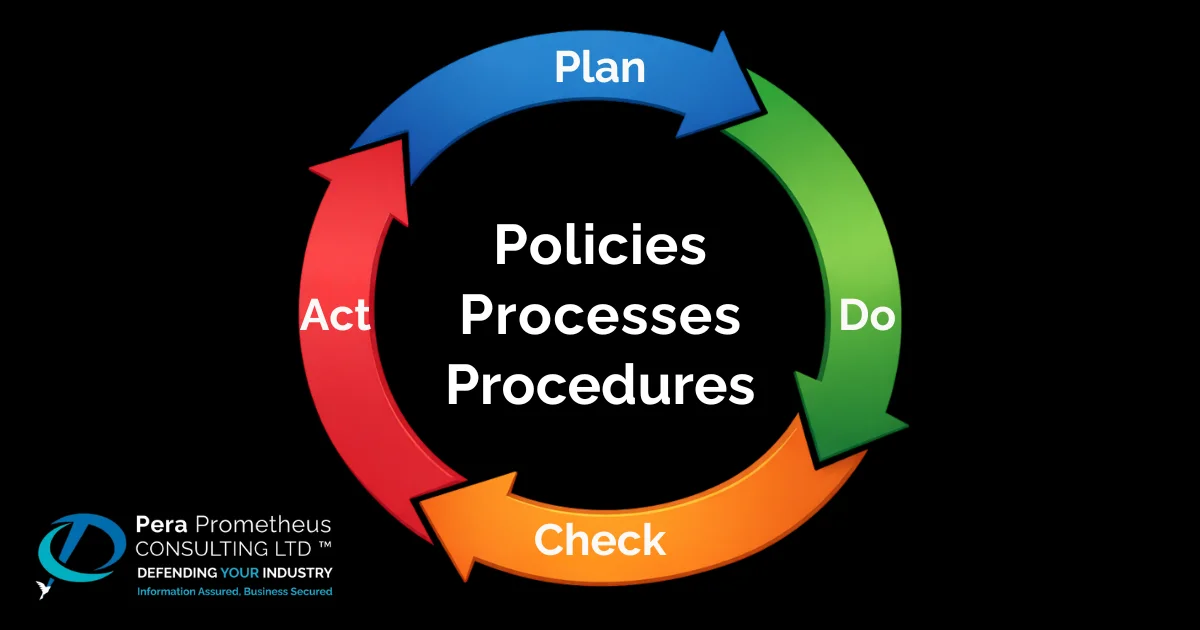
In plain terms, a SMP is a set of documents that informs and directs your staff, exactly how to operate digital equipment and handle sensitive data safely as part of servicing a Defence contract. Think of the SMP as the bridge that translates complicated government security policies into clear, step-by-step instructions for your team to follow every day. The SMP covers a range of activities, including simple actionable steps, such as requiring you to change passwords at regular intervals, making sure screens are locked whenever a desk is left empty, operating a clear desk policy etc. All of which are intended to ensure your business maintains security and protects sensitive information.
For a Defence SME, these procedures are a contractual baseline for working with the MOD. They precisely define what is considered acceptable use of technology, provide the do’s and don’ts and establishes accountability. Crucially, no member of your staff is allowed to access sensitive systems until they have read, understood, and formally sign or acknowledged these procedures.
Why a SMP is Vital for your SME?
1. Ensuring Eligibility for Defence Contracts
For defence procurement, security is a central pillar of commercial eligibility. The MOD mandates security requirements via a Security Aspects Letter (SAL) for any project graded “Official-Sensitive” or above. As part of the tender process, you may be asked to produce your Security Management Plan to demonstrate you are able to conform to the required level of security, for the contract you are bidding for.
2. Strengthening Supply Chain Integrity
Most UK businesses experienced some forms of cyber-attack in 2025 and smaller firms are increasingly targeted. Threat actors often see SMEs as the entry point into the larger defence supply chain. A robust SMP will include activities such as change control, risk assessment and mitigation, firewall management, and access control; all of which will be designed to guard against intentional and inadvertent compromise and protect your intellectual property and reputation. By implementing these procedures, you safeguard both the MOD’s data and your own Business’s commercial viability.
3. Upholding Legal Standards and Due Diligence
The legal landscape changed significantly with the National Security Act 2023, which introduced severe penalties for security failures. For instance, disclosing protected information or committing sabotage can now carry a sentence of life imprisonment. Under the National Security Act, it is not enough to say, “I didn’t know this would hurt the UK.” For your business, this means you have a legal duty to be aware of the risks. If you ignore obvious warning signs or do not follow basic security rules, you could still be held responsible for the damage caused. Having a clear SMP in place, provides your leadership with the necessary due diligence and evidence to show that your organisation takes its legal obligations seriously.
4. Developing Operational Resilience and Continuity
Modern security is not just about building a single protective security barrier, it is about designing a business that can withstand and recover from challenges. This means having systems and processes that allow your business to anticipate, absorb, recover, and adapt when a challenge occurs and for this a defence in depth approach is required. The UK government now advises businesses to be ready to operate without IT and have the ability to stay operational even if your digital world stops. SMPs include incident response plans and disaster recovery actions that make business continuity possible.
Frequently Asked Questions (FAQs)
-
What exactly is a SMP?
It is a formal document providing specific instructions to ensure the secure use of information systems and the handling of sensitive data.
-
Do I need an SMP for every defence contract?
Yes, they are a legal and contractual requirement for any work involving “OFFICIAL-SENSITIVE ” information or higher.
-
Is Cyber Essentials the same as having a SMP?
No. Cyber Essentials provides part of the technical control for an IT system., while the SMP details the broader “instructions” governing your organisation’s specific daily security behaviours.
-
What happens if we have a security breach?
You are contractually obligated to report all incidents to the MOD Defence Industry Warning Advice and Reporting Point (WARP) immediately, depending on severity.
How Pera Prometheus Can Help
At Pera Prometheus, we are a company composed entirely of veterans who have vast experience producing, implementing and assessing SMPs. We understand that as an SME, you need to remain commercially effective while meeting strict MOD requirements.
We offer tailored support, from Gap Analysis, Business Impact Analysis (BIA), to helping you navigate emerging requirements such as Cyber Security Model version 4 (CSM v4) and Defence Cyber Certification (DCC). Our goal is to move your Business from a reactive protection mindset to a proactive security culture who don’t just meet the requirements, you understand them and implement them effectively.
Stay Safe, Stay Secure